
Month: December 2025 (page 1 of 1)

trader joe’s mini tacos instructions

Trader Joe’s Mini Tacos Instructions: A Comprehensive Guide

Trader Joe’s offers a convenient and tasty frozen option with their mini tacos, becoming a popular choice for quick meals and snacks. These instructions will guide you through various cooking methods!

Trader Joe’s Mini Tacos have quickly become a sensation, captivating snackers and meal-preppers alike with their convenience and delightful flavor profile. These bite-sized delights offer a satisfying crunch and a savory filling, making them a versatile option for any occasion. The appeal lies in their simplicity – a ready-to-cook solution for those busy weeknights or spontaneous cravings.

The frozen food aisle at Trader Joe’s is renowned for its innovative and high-quality offerings, and the mini tacos are no exception. They represent the store’s commitment to providing customers with accessible and enjoyable food experiences. Whether you’re seeking a quick lunch, a party appetizer, or a comforting snack, these mini tacos deliver a satisfying experience. They are a testament to how frozen food can be both convenient and delicious, earning a dedicated following among Trader Joe’s enthusiasts.

What are Trader Joe’s Mini Tacos?

Trader Joe’s Mini Tacos are a frozen appetizer or snack consisting of small, crispy taco shells filled with seasoned ground beef or chicken. They come pre-assembled and frozen, requiring minimal preparation before cooking. Typically, a package contains a generous quantity, making them ideal for sharing or enjoying over multiple sittings.

These mini tacos are designed for quick and easy cooking, with instructions for both oven baking and air frying readily available on the packaging. They are a convenient alternative to making tacos from scratch, offering a similar taste experience with significantly less effort. The filling is flavorful and well-seasoned, providing a satisfying savory bite. They are a popular choice for parties, game nights, or a simple weeknight meal, offering a fun and accessible way to enjoy a classic favorite.

Why are they Popular?

Trader Joe’s Mini Tacos have gained significant popularity due to their incredible convenience and satisfying flavor profile. They offer a quick and easy meal or snack option, perfect for busy individuals and families. The pre-assembled nature eliminates the time-consuming task of preparing individual tacos, making them a go-to choice for weeknights or gatherings.

Social media platforms, particularly TikTok and Instagram, have played a large role in boosting their popularity, with numerous users sharing cooking tips and rave reviews. The air fryer method, specifically, has become a viral sensation, showcasing how easily these mini tacos can achieve a perfectly crispy texture. Their affordability and accessibility, coupled with consistently positive feedback, contribute to their enduring appeal among Trader Joe’s shoppers.
Cooking Methods

Trader Joe’s Mini Tacos can be prepared using several methods, including air frying and oven baking, each offering a slightly different result in texture and time.

Air Fryer Instructions

Utilizing an air fryer is a remarkably efficient way to achieve crispy Trader Joe’s Mini Tacos. Many users report excellent results with this method, noting a significantly quicker cooking time compared to traditional oven baking. The circulating hot air ensures even cooking and a delightful crunch.

Several sources suggest a temperature range between 350°F and 375°F for optimal results. One user found success at 370°F for 7 minutes, while others recommend 350°F for 6-8 minutes. Remember to preheat your air fryer for best results. It’s also crucial to avoid overcrowding the basket; work in batches if necessary to ensure each taco cooks evenly and achieves maximum crispiness. Flipping halfway through the cooking process is often recommended for consistent browning.

Optimal Air Fryer Temperature

Determining the ideal temperature for air frying Trader Joe’s Mini Tacos involves balancing speed and achieving a perfectly crispy texture. While variations exist, a sweet spot appears to be between 350°F and 375°F. Lower temperatures, around 350°F, may require slightly longer cooking times but can prevent burning.

Conversely, 370°F or 375°F will cook the tacos more rapidly, potentially yielding a superior crunch. One user successfully used 370°F, while others suggest 350°F as a reliable starting point. It’s important to consider your specific air fryer model, as temperatures can vary. Experimenting within this range is encouraged to find what works best for your appliance and personal preference regarding crispiness. Consistent monitoring during the initial cook is also advised.

Air Fryer Cooking Time

The optimal cooking time for Trader Joe’s Mini Tacos in an air fryer generally falls between 6 to 9 minutes, but this is heavily influenced by the air fryer’s power and the chosen temperature. A common recommendation is 7-8 minutes at 350°F, ensuring a thorough heat penetration and crispy exterior.

However, at higher temperatures like 370°F or 375°F, the cooking time can be reduced to around 5-7 minutes. One user reported success with 7 minutes at 350°F, while another used 5 minutes at 375°F. Remember to flip the tacos halfway through the cooking process for even browning and crisping. Monitoring closely during the final minutes is crucial to prevent burning, especially with faster cooking times. Adjustments may be needed based on your air fryer.

Flipping the Tacos During Cooking

Flipping Trader Joe’s Mini Tacos midway through the cooking process is absolutely essential for achieving optimal crispiness and even heating. This simple step ensures that both sides of the taco shells are exposed to the direct heat of the air fryer or oven, preventing one side from becoming overly browned while the other remains pale and soft.

Typically, you should flip the tacos around the halfway point of the total cooking time. For example, if cooking for 8 minutes, flip them at the 4-minute mark. Use tongs to carefully turn each taco, avoiding breakage. This technique guarantees a uniformly golden-brown and delightfully crunchy texture, elevating the overall enjoyment of these convenient mini tacos. Don’t skip this crucial step!

Oven Baking Instructions

Baking Trader Joe’s Mini Tacos in the oven is a fantastic alternative when an air fryer isn’t available, or for cooking larger batches. This method delivers a reliably crispy result, though it may require slightly longer cooking times compared to air frying. Preparing the baking sheet correctly is key to preventing sticking and ensuring even cooking.

Generally, a temperature of 425°F (218°C) is recommended for optimal baking. The typical oven baking time ranges from 7 to 9 minutes, but always check for desired crispness. Lining your baking sheet with parchment paper is highly advised for easy cleanup and to prevent the tacos from adhering to the surface. Arrange the mini tacos in a single layer, ensuring they aren’t overcrowded for even heat distribution.
Recommended Oven Temperature

When opting to bake Trader Joe’s Mini Tacos in the oven, maintaining the correct temperature is crucial for achieving that desirable crispy texture without burning them. Based on various user experiences and package recommendations, a consistent temperature of 425°F (approximately 218°C) is widely considered ideal.

This temperature strikes a balance, allowing the tacos to cook through thoroughly while simultaneously crisping up the outer shells. Some sources suggest 350°F for a longer cook time, but 425°F generally yields better results in a shorter timeframe. It’s important to preheat your oven to ensure even cooking from the start. Monitoring closely during the baking process is still recommended, as oven variations can occur.

Oven Baking Time
Determining the optimal oven baking time for Trader Joe’s Mini Tacos is key to a perfectly cooked snack. Generally, a baking time of 7 to 9 minutes at 425°F is recommended, though this can vary slightly depending on your oven. Initial reports suggest starting with 7 minutes and checking for desired crispness.

If the tacos aren’t sufficiently golden brown and crispy after 7 minutes, continue baking for an additional 1-2 minutes, carefully monitoring to prevent burning. Some users have found 6-9 minutes sufficient, while others prefer a slightly longer bake. Remember to flip the tacos halfway through the cooking process to ensure even browning and crisping on both sides. Consistent monitoring is vital for optimal results!

Preparing the Baking Sheet

Proper preparation of your baking sheet is crucial for preventing sticking and ensuring even cooking of Trader Joe’s Mini Tacos. While not strictly necessary, lightly greasing the baking sheet with cooking spray is highly recommended. This creates a non-stick surface, allowing the tacos to crisp up beautifully without adhering to the metal.

Alternatively, you can line the baking sheet with parchment paper. This provides an even more effective barrier against sticking and simplifies cleanup. Ensure the tacos are arranged in a single layer on the prepared baking sheet, leaving a small space between each one to promote airflow and even browning. Avoid overcrowding, as this can lead to steaming instead of crisping.
Enhancing the Flavor

Trader Joe’s Mini Tacos are delicious on their own, but adding toppings and dips elevates the experience to a whole new level of flavorful enjoyment!

Adding Toppings

Trader Joe’s Mini Tacos truly shine when customized with your favorite toppings! Consider the possibilities – a sprinkle of shredded cheese, a dollop of sour cream, or a vibrant burst of fresh salsa can transform these little tacos.

Popular Topping Choices include diced tomatoes, shredded lettuce, chopped onions, and a squeeze of lime juice for a zesty kick. For those who enjoy a bit of heat, a dash of your preferred hot sauce is always a welcome addition.

Homemade Salsa Ideas are endless! Try a classic pico de gallo with tomatoes, onions, cilantro, and jalapeños, or a creamy avocado salsa for a milder flavor. A mango salsa adds a sweet and spicy twist, perfectly complementing the savory taco filling. Don’t be afraid to experiment and create your signature salsa!

Popular Topping Choices

When it comes to elevating your Trader Joe’s Mini Tacos, the topping options are truly limitless! Many taco enthusiasts favor the classic combination of shredded cheddar or Monterey Jack cheese, providing a creamy and comforting element. A generous helping of crisp, shredded lettuce adds a refreshing crunch, while finely diced tomatoes contribute a juicy sweetness.

Chopped white or red onions offer a pungent bite, balanced beautifully by a dollop of cool sour cream or creamy avocado. For those seeking a zesty finish, a squeeze of fresh lime juice brightens the flavors. Don’t underestimate the power of a sprinkle of chopped cilantro for a vibrant, herbaceous note!

Ultimately, the best toppings are those that suit your personal preferences, transforming these mini tacos into a customized culinary delight.

Homemade Salsa Ideas

Take your Trader Joe’s Mini Tacos to the next level with a vibrant, homemade salsa! A classic pico de gallo, featuring diced tomatoes, onions, jalapeños, cilantro, and lime juice, offers a fresh and zesty kick. For a smoky flavor, try a roasted tomato salsa – roasting the tomatoes, onions, and peppers before blending intensifies their sweetness.

A fruity mango salsa, combining diced mangoes, red onion, bell peppers, and a touch of habanero, provides a delightful sweet and spicy contrast. Alternatively, a creamy avocado salsa, blending avocado, lime juice, cilantro, and a hint of garlic, adds a luxurious texture.
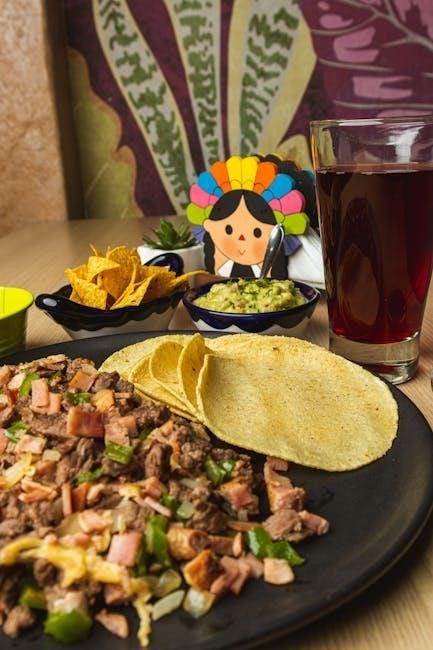
Experiment with different chili peppers to control the heat level, and don’t be afraid to add a splash of orange juice for extra brightness. Homemade salsa elevates these mini tacos from good to extraordinary!

Dipping Sauces

Enhance your Trader Joe’s Mini Taco experience with a selection of complementary dipping sauces! Sour cream or Mexican crema provides a cool and tangy counterpoint to the taco’s savory filling. Guacamole, whether store-bought or homemade, adds a creamy, avocado-rich dimension. For those who enjoy a bit of heat, a chipotle mayo, created by blending mayonnaise with chipotle peppers in adobo sauce, is an excellent choice.

A simple lime crema, made by mixing sour cream with lime juice and zest, offers a refreshing zest. Consider a spicy queso dip for a cheesy, flavorful indulgence.

To create your own dip, blend Greek yogurt with taco seasoning and a squeeze of lime for a lighter option. Don’t hesitate to experiment with different flavors to find your perfect pairing!

Recommended Dips

When enjoying Trader Joe’s Mini Tacos, several dips elevate the experience. A classic sour cream is always a winner, providing a cool contrast to the savory filling. Guacamole, readily available at Trader Joe’s, adds a creamy, fresh element. For spice lovers, a vibrant salsa verde or a fiery habanero salsa are fantastic choices.

Trader Joe’s also offers pre-made queso dips, perfect for a cheesy indulgence. A creamy cilantro-lime dressing provides a zesty kick. Consider a simple avocado crema, blending avocado with lime juice and a touch of sour cream.

Don’t overlook the convenience of pre-made pico de gallo for a fresh, chunky dip. Ultimately, the best dip depends on your personal preference – explore and enjoy!

Making Your Own Dip

Creating a homemade dip for your Trader Joe’s Mini Tacos is surprisingly easy and rewarding! A quick guacamole can be made by mashing avocados with lime juice, diced onion, cilantro, and a pinch of salt. For a creamy avocado crema, blend avocado with sour cream, lime juice, and a dash of garlic powder.

A simple salsa involves combining diced tomatoes, onion, jalapeño, cilantro, and lime juice. Experiment with roasted tomatoes for a deeper flavor. A spicy chipotle dip can be crafted by blending chipotle peppers in adobo sauce with mayonnaise and lime juice.

Don’t hesitate to personalize your dip with your favorite spices and herbs. Freshness is key, so use ripe ingredients for the best taste!
Troubleshooting & Tips

Troubleshooting common issues like sogginess or burning ensures perfectly crispy Trader Joe’s Mini Tacos. Adjusting cooking times and temperatures is often the key to success!

Tacos Not Crispy Enough

If your Trader Joe’s Mini Tacos aren’t achieving that desirable crispy texture, several adjustments can be made. First, ensure your air fryer or oven is adequately preheated; a lower initial temperature can lead to steaming instead of crisping. Consider extending the cooking time by a minute or two, closely monitoring to prevent burning.

Another crucial factor is overcrowding. Avoid layering the tacos in the air fryer basket or on the baking sheet, as this restricts airflow and hinders even cooking. A single layer is ideal for optimal crispness. Additionally, a light misting of oil – though not always necessary – can promote browning and enhance the texture. Remember, different air fryers and ovens vary, so experimentation with time and temperature is often required to find the sweet spot for your appliance.

Finally, ensure you’re not using too low of a temperature; 350-400°F generally yields the best results.

Tacos Burning

If you find your Trader Joe’s Mini Tacos are burning before they’re fully heated through, immediate adjustments are necessary. The most common culprit is an excessively high cooking temperature. Reduce the temperature by 25°F increments, checking for improvement after each adjustment. Overcooking is easily done, especially in powerful air fryers.

Another factor could be the cooking time. Begin checking the tacos a minute or two before the recommended time, and adjust accordingly. Pay close attention to visual cues – look for golden brown color rather than dark, charred spots. If using an oven, ensure the rack isn’t positioned too close to the heating element.

Furthermore, some air fryers cook more aggressively than others, so reducing the cooking time is often the best solution. A quick flip halfway through can also help prevent uneven burning.

Cooking Time Adjustments

Adjusting the cooking time for Trader Joe’s Mini Tacos is often necessary to achieve optimal crispiness and internal temperature. Air fryer cooking times typically range from 5 to 8 minutes at 350-375°F, but variations exist based on your specific model. Oven baking generally requires 7-9 minutes at 425°F.

If the tacos aren’t crispy enough, increase the cooking time in 1-minute increments, checking after each addition. Conversely, if they’re browning too quickly, reduce the time. Remember that smaller batches generally cook faster than larger ones.

Consider the initial temperature of the tacos; frozen tacos will require a longer cooking time than those that have partially thawed. Experimentation is key to finding the sweet spot for your appliance and preferences!

Storage of Leftover Tacos

Properly storing leftover Trader Joe’s Mini Tacos is crucial for maintaining their quality and ensuring food safety. Allow the cooked tacos to cool completely before transferring them to an airtight container. This prevents condensation, which can lead to sogginess.

Refrigerate the cooled tacos promptly, ideally within two hours of cooking. They will generally remain fresh and flavorful for up to 3-4 days when stored correctly. For longer-term storage, freezing is an option, though the texture may change slightly upon thawing.

When reheating, the air fryer is recommended to restore some of the original crispiness. Avoid microwaving, as this tends to make them soft. Enjoy your leftover tacos within the recommended timeframe for the best taste!

Nutritional Information

Trader Joe’s Mini Tacos contain approximately 174 calories per serving, with ingredient breakdowns including beef, cheese, and seasonings for a tasty snack!

Calorie Count

Trader Joe’s Mini Tacos offer a convenient, albeit calorie-dense, snack or quick meal option. Understanding the calorie count is crucial for those mindful of their dietary intake. A typical serving size, generally around three to four mini tacos, contains approximately 174 calories. This value can fluctuate slightly depending on the specific variety – beef versus chicken, for example – and any toppings added post-cooking.

It’s important to note that while the tacos themselves contribute a significant portion of calories, the addition of dips, salsa, or sour cream can substantially increase the overall caloric load. For individuals tracking macronutrients, each serving also provides a moderate amount of fat and carbohydrates, alongside a reasonable protein content. Considering portion control and mindful additions can help enjoy these mini tacos as part of a balanced diet.

Ingredient Breakdown

Trader Joe’s Mini Tacos boast a surprisingly extensive ingredient list, reflecting their pre-made convenience. The core components typically include wheat flour tortillas, seasoned ground beef or chicken, and a blend of cheeses. Seasoning mixes contain a variety of spices like chili powder, cumin, and paprika, contributing to their signature flavor. You’ll also find ingredients like modified food starch, dextrose, and various vegetable oils used in processing.

Further examination reveals the presence of hydrolyzed vegetable protein, yeast extract, and natural flavors, enhancing the savory profile. Preservatives like sodium benzoate and potassium sorbate are included to maintain freshness. While convenient, those seeking a cleaner ingredient list might prefer making tacos from scratch. Understanding this breakdown allows informed choices for dietary needs and preferences.


winking lizard menu pdf

Winking Lizard Menu PDF: A Comprehensive Overview (Updated 12/17/2025)

The Winking Lizard boasts an extensive menu, featuring burgers, sandwiches, seafood, and specials like the Meltdown and Banh Mi Shrimp Tacos, readily available in PDF format.

The Winking Lizard tavern is renowned for its diverse and expansive menu, offering a wide array of American cuisine with a distinctive Cajun and Creole influence. From hearty burgers and flavorful chicken sandwiches to fresh seafood and unique specials, there’s something to satisfy every palate.

The restaurant’s popularity stems from its commitment to generous portions, a lively atmosphere, and a constantly evolving selection of dishes. Customers can explore options like the Creole Burger, Cajun Catfish Po Boy, and the intriguing Banh Mi Shrimp Tacos.

Finding the most up-to-date menu information, including pricing, is easily achieved through their readily available PDF version.

Availability of the Winking Lizard Menu PDF

Accessing the current Winking Lizard menu in PDF format is straightforward, ensuring diners have the latest pricing and offerings at their fingertips. While a direct link isn’t explicitly provided in the available text, a quick online search for “Winking Lizard menu PDF” yields results.

The PDF comprehensively details all categories – from “Reptizers” like Spinach and Artichoke Dip and Loaded Skins, to burgers, chicken sandwiches, and seafood selections such as Crab Cakes and the Cajun Catfish Po Boy.

Regular updates, as evidenced by the 12/17/2025 date, guarantee accuracy for planning your visit and exploring menu specials like The Meltdown.

Winking Lizard: Core Menu Categories

The Winking Lizard’s menu is remarkably diverse, categorized to simplify the dining experience. Core sections include enticing “Reptizers” – appetizers like Loaded Skins and Southwestern Egg Rolls – alongside a robust selection of burgers, featuring both classic cheeseburger options and specialty creations like the Creole Burger.

Chicken enthusiasts will find a variety of sandwiches, from BBQ Chicken Club to Cajun Chicken. Seafood lovers can indulge in Cajun Catfish Po Boys and Crab Cakes. Beyond these, the menu extends to sandwiches & wraps, sides, soups, and decadent desserts like Snickers Pie.

Appetizers ー “Reptizers”

The Winking Lizard playfully refers to its appetizer selection as “Reptizers,” offering a tempting start to any meal. Popular choices include the creamy Spinach and Artichoke Dip, a blend of spinach, artichoke hearts, and parmesan cheese. For those craving something heartier, Loaded Skins present a classic option.

Southwestern Egg Rolls provide a flavorful, crispy alternative. Other notable “Reptizers” mentioned are Loaded Lizard Nachos and Cheese, Fried Cheese Wedges, and Garlic Cheese Bread, all designed for sharing (or enjoying solo!). These appetizers set the stage for the menu’s main courses.

Spinach and Artichoke Dip Details

The Winking Lizard’s Spinach and Artichoke Dip is a standout “Reptizer,” described as a creamy and delightful blend of carefully chopped spinach and tender artichoke hearts. This appetizer is further enhanced with the addition of rich, flavorful parmesan cheese, creating a harmonious combination of textures and tastes.

It’s a popular choice for sharing, offering a comforting and satisfying start to a meal. While specific pricing isn’t detailed, the description highlights the quality ingredients and careful preparation that go into this beloved dip, making it a must-try item from their menu.

Loaded Skins: Variations and Pricing

Winking Lizard’s “Reptizers” section prominently features Loaded Skins, a classic appetizer. While specific variations aren’t explicitly listed, the menu indicates they are a popular choice alongside other options like Loaded Lizard Nachos and Fried Cheese Wedges. The provided text details a price of $2.49, suggesting an affordable and shareable option.

It’s reasonable to assume variations might include different toppings, though details are absent. The inclusion of Loaded Skins demonstrates the restaurant’s commitment to offering familiar, crowd-pleasing appetizers alongside their more unique creations, all detailed within their comprehensive menu PDF.

Southwestern Egg Rolls: A Popular Choice

The Winking Lizard’s appetizer selection, known as “Reptizers,” includes Southwestern Egg Rolls, explicitly identified as a popular choice within the menu. While the specific ingredients aren’t detailed in the provided text, their inclusion alongside Spinach and Artichoke Dip and Loaded Skins highlights their appeal.

These egg rolls likely offer a flavorful, crispy start to a meal, catering to those seeking a Southwestern-inspired flavor profile. The menu PDF serves as the best resource for a complete ingredient list and potential dipping sauces, showcasing the Lizard’s diverse appetizer offerings.

Burger Selection

The Winking Lizard’s menu PDF showcases a robust burger selection, featuring both classic options and unique specialty creations. The Creole Burger is specifically highlighted, indicating a signature offering with distinct flavors. The menu is described as “really big,” suggesting a wide variety of burger choices beyond those explicitly mentioned.

Customers can anticipate a diverse range of burger experiences, potentially including customizable options. The PDF menu is the definitive source for detailed descriptions, pricing (like the $14.85 Creole Burger), and any available burger customization features, ensuring a satisfying meal.

Classic Cheeseburger Options

While the provided text doesn’t detail specific classic cheeseburger variations at the Winking Lizard, the menu PDF undoubtedly includes them as a foundational element of their burger selection. Given the “really big” menu, one can expect standard cheeseburger builds with options for different cheeses, perhaps including cheddar, Swiss, or provolone.

The PDF likely outlines pricing for these classic options, alongside potential add-ons. Expect the ability to customize with toppings, mirroring the broader burger customization possibilities. Though not explicitly stated, a “Just Plain Fowl” option suggests a willingness to accommodate simple preferences.

Specialty Burgers: Creole Burger

The Winking Lizard menu PDF features a standout specialty burger: the Creole Burger, priced at $14.85. While specific ingredients aren’t detailed in the provided snippets, its name strongly suggests a flavor profile inspired by Louisiana Creole cuisine. Expect a potentially spicy burger, possibly incorporating andouille sausage, Cajun seasoning, or a remoulade sauce.

Given the breadth of the menu, the Creole Burger likely offers a unique and flavorful alternative to standard burger options. The PDF would detail the complete ingredient list, allowing customers to fully appreciate this distinctive offering. It’s a key item within their extensive burger selection.

Burger Customization Options

Although the provided Winking Lizard menu PDF excerpts don’t explicitly list burger customization options, it’s reasonable to assume they are available. Most restaurants allow modifications to their burgers, and the Lizard’s extensive menu suggests a willingness to cater to individual preferences.

Customers likely can choose bun types, cheese varieties, and add or remove toppings. Given the Cajun and Creole influences apparent throughout the menu, options like different sauces (remoulade, spicy mayo) are probable. The PDF, when fully consulted, would reveal the complete range of available customizations for a personalized burger experience.

Chicken Sandwiches

The Winking Lizard menu features a diverse selection of chicken chest sandwiches, offering something for every palate. Options include the BBQ Chicken Club, promising a classic flavor profile, alongside more adventurous choices like the Jerk Chicken Sandwich, known for its distinct spice level and preparation.

The Cajun Chicken Sandwich provides a spicy alternative, while the Maui Maui, Cheddar Club, Buffalo Chicken, and a simple “Just Plain Fowl” cater to varying preferences. Exploring the full menu PDF will reveal detailed ingredient lists and pricing for each chicken sandwich offering.

BBQ Chicken Club: Ingredients and Flavor Profile

The Winking Lizard’s BBQ Chicken Club sandwich is a classic choice, detailed within their comprehensive menu PDF. While specific ingredient breakdowns aren’t explicitly provided in the snippets, it’s safe to assume this sandwich features a grilled or fried chicken breast, slathered in a tangy BBQ sauce.

Expect the “Club” designation to indicate the inclusion of bacon and likely lettuce and tomato, all nestled within a toasted bun. The flavor profile leans towards sweet and smoky, offering a comforting and familiar taste. Checking the current menu PDF confirms precise components and pricing.

Jerk Chicken Sandwich: Spice Level and Preparation

The Winking Lizard’s Jerk Chicken Sandwich, detailed in their menu PDF, promises a flavorful experience. “Jerk” seasoning inherently implies a significant spice level, utilizing Scotch bonnet peppers and a blend of aromatic spices. Preparation likely involves marinating the chicken in this vibrant jerk seasoning before grilling or frying.

Expect a bold, fiery kick balanced by the sweetness of the marinade. The menu doesn’t specify accompanying toppings, but a cooling sauce or slaw might complement the heat. For spice enthusiasts, this sandwich is a must-try, as confirmed by the current menu PDF.

Cajun Chicken Sandwich: A Spicy Alternative

The Winking Lizard offers the Cajun Chicken Sandwich as a flavorful, spicy alternative within their diverse chicken sandwich selection, as detailed in the menu PDF. Cajun seasoning, while offering heat, typically presents a more complex flavor profile than jerk, incorporating paprika, cayenne, garlic powder, and other herbs.

Preparation likely involves coating the chicken with this blend before cooking. The menu doesn’t detail specific toppings, but expect a sandwich designed to deliver a robust, savory, and moderately spicy experience. It’s a great choice for those seeking Cajun flavors without extreme heat, according to the current menu.

Seafood Dishes

The Winking Lizard menu PDF showcases a selection of seafood options, including the popular Cajun Catfish Po Boy and Crab Cakes. The Cajun Catfish Po Boy, priced at $14.30, offers a taste of Louisiana with its seasoned catfish and traditional Po Boy presentation.

Crab Cakes, also priced at $14.30, are prepared and served in a style that highlights the delicate flavor of the crab. While specific details regarding preparation methods aren’t extensively detailed in the available menu information, these dishes represent the Winking Lizard’s commitment to offering diverse culinary experiences.

Cajun Catfish Po Boy: Description and Price

The Winking Lizard menu PDF lists the Cajun Catfish Po Boy as a featured seafood offering, priced at $14.30. This dish delivers a taste of New Orleans, featuring seasoned catfish prepared in the Cajun style. It’s served on a traditional Po Boy roll, completing the authentic experience.

While the menu doesn’t detail specific ingredients beyond the catfish and roll, the “Cajun” designation suggests a flavorful spice blend. This sandwich provides a satisfying and moderately priced seafood option for diners seeking a regional specialty within the Winking Lizard’s diverse menu.

Crab Cakes: Preparation and Serving Style

According to the Winking Lizard menu PDF, their Crab Cakes are available for $14.30. The menu simply states “Crab Cakes,” offering no detailed description of their preparation. However, one can assume they are pan-seared or fried to a golden brown, a common preparation method for crab cakes.

The serving style isn’t specified, but it’s likely they are served with a side, potentially tartar sauce or a remoulade, complementing the delicate crab flavor. Diners looking for a classic seafood dish will find these crab cakes a reasonably priced option on the extensive Winking Lizard menu.

Sandwiches & Wraps (Beyond Chicken)

The Winking Lizard menu PDF showcases a diverse selection of sandwiches and wraps extending beyond their popular chicken options. Notably, the traditional New Orleans Muffuletta stands out at $14.30. While details are limited, this suggests a hearty sandwich filled with Italian meats, cheeses, and olive salad.

The menu’s breadth indicates other non-chicken sandwich choices are available, though specifics aren’t detailed in the provided information. Patrons seeking alternatives to poultry will find the Muffuletta a compelling option, representing a flavorful departure from typical sandwich fare within the Winking Lizard’s offerings.

Muffuletta: Traditional New Orleans Sandwich

The Winking Lizard’s menu PDF features the Muffuletta, a classic sandwich hailing from New Orleans, priced at $14.30. This suggests a commitment to offering regional culinary experiences. While the menu doesn’t detail the ingredients, a traditional Muffuletta consists of a round loaf filled with Italian cold cuts – salami, ham, mortadella – provolone, Swiss, and a tangy olive salad.

Expect a substantial and flavorful sandwich, showcasing the vibrant tastes of Louisiana. The Winking Lizard’s inclusion of this item demonstrates a dedication to diverse sandwich options beyond their core chicken selections, appealing to those seeking authentic New Orleans flavors.

Sides & Extras

The Winking Lizard menu PDF highlights several tempting sides and extras to complement your meal. Pfreds Preferred Pfries are a signature offering, suggesting a unique and highly-regarded potato option. Garlic Cheese Bread is also available, priced at $2.49, providing a classic, flavorful accompaniment.

Further options include Loaded Lizard Nachos and Cheese, Fried Cheese Wedges, and Loaded Skins, indicating a focus on shareable, indulgent sides. These extras allow diners to customize their experience and enhance the overall flavor profile of their chosen entrees, as detailed within the menu PDF.

Pfreds Preferred Pfries: A Signature Side

According to the Winking Lizard menu PDF, Pfreds Preferred Pfries are clearly positioned as a standout side option. While specific details regarding their preparation aren’t explicitly stated in the provided text, the designation “Preferred” implies a unique quality or flavor profile setting them apart from standard fries.

Their prominent mention suggests they are a popular choice among patrons and a key component of the overall dining experience. Diners seeking a classic, yet potentially elevated, side dish will likely find Pfreds Preferred Pfries a satisfying addition to their Winking Lizard meal, as showcased in the menu.

Garlic Cheese Bread: Details and Pricing

The Winking Lizard menu PDF lists Garlic Cheese Bread as a readily available side or appetizer option. The provided information indicates a price of $2.49 for this delectable offering. While the exact preparation method isn’t detailed, the name clearly suggests a bread base generously coated with garlic and melted cheese.

This makes it an appealing choice for those seeking a warm, flavorful accompaniment to their meal. Its affordable price point further enhances its attractiveness as a shareable side or a satisfying individual indulgence, as reflected in the current menu offerings.

Soups

The Winking Lizard menu PDF highlights “Soups And Reptizers” as a combined category, suggesting seasonal soup options are frequently paired with their appetizer selection. Specific soup varieties aren’t explicitly listed in the provided text, indicating potential rotation based on availability and time of year.

This approach allows the restaurant to utilize fresh ingredients and offer diverse choices to its patrons. Customers interested in the current soup offerings should consult the most recent menu PDF or inquire with their server for details on daily specials and flavor profiles.

Soups And Reptizers: Seasonal Options

The Winking Lizard’s menu PDF indicates a dynamic pairing of “Soups And Reptizers,” emphasizing seasonal availability. While specific soup names aren’t detailed, this suggests a rotating selection designed to complement the current time of year and ingredient freshness.

This strategy allows for culinary creativity and provides customers with varied choices. Expect potential offerings like hearty chili during colder months or lighter, refreshing soups in warmer weather. Combining soups with “Reptizers” (appetizers) encourages a diverse dining experience, offering both a starter and a comforting bowl.

Desserts

The Winking Lizard menu PDF highlights the Snickers Pie as a featured dessert item, promising a sweet ending to your meal. While the extent of the dessert selection isn’t fully detailed, the presence of this signature pie suggests a commitment to indulgent treats;

Customers can anticipate other tempting options beyond the Snickers Pie, potentially including classic desserts or unique creations that complement the restaurant’s Cajun and American fusion cuisine. Exploring the full menu PDF is recommended to discover all available sweet choices and satisfy your dessert cravings.

Snickers Pie: A Featured Dessert Item

The Winking Lizard menu PDF prominently features the Snickers Pie, indicating its status as a customer favorite and a key component of their dessert offerings. This pie likely delivers a decadent experience, mirroring the flavors of the iconic Snickers candy bar – a harmonious blend of chocolate, caramel, peanuts, and nougat.

Expect a rich and satisfying slice, perfect for those seeking a sweet indulgence after enjoying the restaurant’s savory Cajun and American dishes. The menu doesn’t detail specific ingredients, but the name promises a delightful recreation of the beloved candy in pie form;

Menu Specials & Limited-Time Offers

The Winking Lizard menu PDF showcases a rotating selection of menu specials and limited-time offers, adding excitement and variety for returning customers. Currently highlighted items include The Meltdown and Banh Mi Shrimp Tacos, demonstrating a fusion of flavors and innovative culinary creations.

Other featured specials, as noted in the menu, encompass Loaded Spuds, a Meatball Smash Stack, and Joe’s American Chili. These offerings, alongside Korean BBQ sauce options, suggest a dynamic menu that adapts to seasonal ingredients and customer preferences, ensuring a fresh and engaging dining experience.

The Meltdown: A Unique Menu Item

The Winking Lizard menu PDF prominently features “The Meltdown” as a distinctive special. While specific details regarding its composition aren’t fully elaborated upon within the provided text snippets, its inclusion amongst other limited-time offers suggests a creatively constructed dish.

Positioned alongside items like Banh Mi Shrimp Tacos, Loaded Spuds, and a Meatball Smash Stack, The Meltdown likely represents a bold flavor combination or a unique preparation method. Its designation as a special indicates a temporary availability, encouraging diners to experience this particular culinary creation while it’s offered.

Banh Mi Shrimp Tacos: Fusion Cuisine

The Winking Lizard menu PDF showcases “Banh Mi Shrimp Tacos,” a clear example of the restaurant’s willingness to explore fusion cuisine. This dish creatively blends the flavors of Vietnamese Banh Mi sandwiches with the popular format of Mexican tacos, utilizing shrimp as the protein.

Listed alongside other specials like The Meltdown and Loaded Spuds, these tacos represent a limited-time offering, highlighting the restaurant’s innovative approach to menu development. The combination suggests a vibrant flavor profile, likely incorporating pickled vegetables, cilantro, and a spicy sauce, offering a unique dining experience.

Beverages (Not Detailed in Provided Text)

While the provided snippets of the Winking Lizard menu PDF concentrate on food items – from “Reptizers” and burgers to seafood and desserts – details regarding their beverage selection are notably absent. It’s reasonable to assume, given the diverse food menu, that a comprehensive drink list exists.

This likely includes a range of options such as soft drinks, iced tea, coffee, and a selection of alcoholic beverages like beer and cocktails. Further exploration of the complete menu PDF would be necessary to ascertain the full scope of their beverage offerings, complementing their extensive food choices.

Locating the Most Current Winking Lizard Menu PDF

Finding the latest Winking Lizard menu in PDF format requires a focused online search. While direct links aren’t provided in the available text, a search using keywords like “Winking Lizard menu PDF” and the current year (2025) should yield results.

Checking the official Winking Lizard website is the most reliable method. Often, restaurants feature downloadable PDFs of their menus on their site. Social media pages and third-party delivery apps may also host current menu versions. Always verify the date to ensure you have the most up-to-date pricing and offerings.

gardner’s art through the ages volume 2 16th edition pdf

Gardner’s Art Through the Ages‚ 16th Edition: A Comprehensive Overview

Gardner’s Art Through the Ages‚ 16th Edition‚ offers a global historical perspective‚ with Volume 2 readily available as a PDF file online through various platforms.

Numerous sources‚ including library databases and online repositories‚ provide access to this comprehensive resource for students and enthusiasts alike‚ facilitating in-depth study.

The 16th edition‚ authored by Fred S. Kleiner‚ builds upon Helen Gardner’s legacy‚ presenting a grand tour of art from the Stone Age to modern times.

Digital formats like PDF enhance accessibility‚ allowing users to explore the wonders of human creativity with ease and convenience‚ supporting art historical research.

Availability of the 16th Edition PDF

Gardner’s Art Through the Ages‚ 16th Edition‚ Volume 2‚ in PDF format‚ is a frequently sought-after resource for art history students and scholars. While official channels like Cengage Learning may offer access through purchase or institutional subscriptions‚ numerous online platforms host digital copies.

Websites like Libgen are often mentioned in searches for the PDF‚ though accessing materials through such sources raises legal and ethical considerations (discussed elsewhere). The availability fluctuates‚ with users reporting varying success in locating the complete Volume 2.

Digital magazine publishing platforms also occasionally feature the textbook as an interactive publication. Searching specifically for “Gardner’s Art Through the Ages 16th edition PDF Volume 2” yields numerous results‚ but verifying the legitimacy and completeness of the file is crucial.

It’s important to note that access can be intermittent‚ and the presence of a PDF does not guarantee its legality or quality.

Legality and Ethical Considerations of PDF Downloads

Downloading a PDF of Gardner’s Art Through the Ages‚ 16th Edition‚ Volume 2 from unofficial sources carries significant legal and ethical implications. Copyright law protects the intellectual property of the authors‚ Helen Gardner and Fred S. Kleiner‚ and publisher‚ Cengage Learning.

Unauthorized distribution and downloading constitute copyright infringement‚ potentially leading to legal repercussions for the user. Furthermore‚ utilizing illegally obtained materials undermines the financial sustainability of academic publishing and the creation of future editions.

Ethically‚ supporting legitimate channels demonstrates respect for the authors’ work and the publishing industry.

While access to educational resources is important‚ it should be obtained through legal means‚ such as purchasing the textbook‚ utilizing library resources‚ or accessing licensed digital versions. Choosing legal avenues ensures fair compensation for creators and promotes a sustainable academic environment. Consider the impact of your choices on the future of art historical scholarship.

Sources for Obtaining the Textbook

Several legitimate avenues exist for acquiring Gardner’s Art Through the Ages‚ 16th Edition‚ Volume 2. The primary source is directly through the publisher‚ Cengage Learning‚ offering both physical copies and digital access options.

Major online booksellers‚ such as Amazon and Barnes & Noble‚ also stock the textbook in various formats‚ including potentially a PDF version through authorized digital platforms. University bookstores represent another reliable source‚ often providing student discounts.

Library databases‚ both physical and digital‚ may offer access to the textbook for research purposes. Platforms like Issuu host interactive publications‚ potentially including excerpts or related materials.

However‚ exercise caution with unofficial websites claiming to offer free PDF downloads‚ as these often violate copyright laws. Prioritize legal and ethical acquisition methods to support the authors and the academic community.

Historical Context of Gardner’s Art Through the Ages

Gardner’s Art Through the Ages began with Helen Gardner in 1936‚ evolving through editions‚ with Fred Kleiner continuing her global art history vision.

The 16th edition builds on 85 years of expertise‚ offering a comprehensive overview‚ often accessible as a convenient PDF resource.

Origins and Authorship: Helen Gardner’s Legacy

Helen Gardner (1878-1946) initiated Gardner’s Art Through the Ages in 1936‚ establishing a foundational text for art history education. Her pioneering work presented a comprehensive‚ chronological survey of global art‚ initially focusing on Western traditions but progressively expanding its scope.

Gardner’s approach emphasized accessibility and clarity‚ making complex art historical concepts understandable to a broad audience. The textbook’s enduring success stems from her commitment to rigorous scholarship combined with engaging prose. Later editions‚ including the 16th edition‚ have benefited from her initial framework.

While the 16th edition is authored by Fred S. Kleiner‚ it remains deeply rooted in Gardner’s original vision. The availability of Volume 2 as a PDF allows wider access to this legacy‚ enabling students and researchers to engage with a continually updated and refined resource built upon Gardner’s foundational contributions to the field.

Her work continues to inspire and inform art historical study today.

Evolution of the Textbook Through Editions

Gardner’s Art Through the Ages has undergone significant evolution since its initial publication‚ adapting to new scholarship and expanding its global perspective. Each edition has incorporated updated research‚ revised interpretations‚ and a broader range of artistic traditions.

The transition to the 16th edition‚ authored by Fred S. Kleiner‚ represents a continuation of this process. It builds upon 85 years of expertise‚ integrating contemporary art historical methodologies and discoveries. The increasing availability of Volume 2 as a PDF reflects the shift towards digital learning resources.

Earlier editions‚ while valuable‚ lacked the comprehensive coverage of non-Western art found in the 16th edition. The PDF format facilitates access to these expanded materials‚ allowing for more inclusive and nuanced art historical study. The textbook’s evolution demonstrates a commitment to representing the full diversity of human artistic expression.

This ongoing refinement ensures its relevance in contemporary academic settings.

Fred S. Kleiner’s Contributions to the 16th Edition

Fred S. Kleiner‚ holding a Ph.D. from Columbia University‚ significantly shaped the 16th edition of Gardner’s Art Through the Ages. He brought art to life‚ building upon Helen Gardner’s foundational work with updated scholarship and a global perspective.

Kleiner’s expertise ensured the textbook remained a leading resource‚ incorporating new research and interpretations. The accessibility of Volume 2 as a PDF is a testament to his commitment to wider educational reach. His contributions extend beyond authorship‚ encompassing a dedication to clear and engaging presentation;

He skillfully integrated diverse artistic traditions‚ enhancing the textbook’s inclusivity. The PDF version allows students to easily navigate and study these expanded materials. Kleiner’s work ensures the 16th edition continues Gardner’s legacy‚ providing a comprehensive and accessible overview of art history.

His dedication to the field is evident throughout the text.

Content and Scope of the 16th Edition (Volume 2)

Volume 2 of Gardner’s Art Through the Ages‚ 16th Edition‚ presents a comprehensive survey of art history‚ readily available as a convenient PDF.

It explores artistic movements and styles from the Renaissance onward‚ offering a global perspective.

Focus on Global Art History

Gardner’s Art Through the Ages‚ 16th Edition‚ particularly Volume 2‚ distinguishes itself through its commitment to a truly global art historical narrative‚ often accessible as a PDF for convenient study.

Unlike earlier editions with a predominantly Western focus‚ the 16th edition actively incorporates artistic traditions from across the world – Africa‚ Asia‚ the Americas‚ and Oceania – alongside European achievements.

This broadened scope isn’t merely additive; it fundamentally recontextualizes Western art within a larger‚ interconnected global framework.

The PDF version allows students to easily navigate and compare diverse artistic expressions‚ fostering a deeper understanding of cultural exchange and influence.

Fred Kleiner’s revisions emphasize the interconnectedness of artistic developments‚ demonstrating how artistic ideas and techniques traveled and transformed across continents‚ enriching the global art historical landscape.

This global perspective is crucial for contemporary art historical scholarship and is readily available within the digital PDF format.

Time Period Covered in Volume 2

Volume 2 of Gardner’s Art Through the Ages‚ 16th Edition‚ available as a PDF‚ primarily concentrates on the art and architecture spanning from the Renaissance through the late 19th century.

It begins with a detailed examination of Renaissance art in Italy‚ progressing through the High Renaissance and Mannerism‚ offering a comprehensive overview of this pivotal period.

The PDF then delves into the Baroque era‚ exploring its dramatic and ornate styles across Europe and Latin America.

Subsequent chapters cover the 18th and 19th centuries‚ encompassing Neoclassicism‚ Romanticism‚ Realism‚ and the precursors to modern art.

This chronological structure‚ easily navigable in the digital PDF format‚ allows students to trace the evolution of artistic styles and movements over several centuries.

The volume concludes with a foundation for understanding the radical shifts that would define 20th-century art‚ providing a solid historical context.

Key Art Movements and Styles Included

The Gardner’s Art Through the Ages‚ 16th Edition‚ PDF of Volume 2 meticulously details a vast array of art movements and styles. Central to its coverage is the Italian Renaissance‚ encompassing Early‚ High‚ and Venetian Renaissance characteristics.

Baroque art‚ with its dramatic tenebrism and opulent decoration‚ receives extensive attention‚ alongside Rococo’s playful elegance.

The PDF further explores Neoclassicism’s revival of classical forms‚ contrasting it with the emotional intensity of Romanticism.

Realism’s commitment to depicting everyday life and the rise of Impressionism are thoroughly examined.

Additionally‚ the volume covers movements like Pre-Raphaelitism and Art Nouveau‚ showcasing the diverse artistic expressions of the 19th century.

Through detailed analyses and visual examples within the PDF‚ students gain a comprehensive understanding of these influential styles.

Features and Enhancements in the 16th Edition

Gardner’s Art Through the Ages‚ 16th Edition PDF boasts updated scholarship‚ improved visuals‚ and digital learning tools for an enriched study experience.

These enhancements elevate comprehension.

Updated Scholarship and Research

Gardner’s Art Through the Ages‚ 16th Edition‚ including its Volume 2 PDF version‚ reflects the latest advancements in art historical research and scholarship. Fred S. Kleiner meticulously integrated new discoveries and interpretations‚ ensuring the textbook remains a current and reliable resource.

This edition incorporates recent archaeological findings‚ revised chronologies‚ and evolving perspectives on artistic styles and cultural contexts. The PDF format allows for easy access to these updated insights‚ benefiting students and researchers alike. Scholarly debates and emerging theories are thoughtfully presented‚ encouraging critical thinking and a nuanced understanding of art history.

Furthermore‚ the 16th edition addresses previously underrepresented artists and movements‚ promoting a more inclusive and global perspective. The digital PDF accessibility facilitates seamless integration of this cutting-edge scholarship into academic coursework and independent study.

Improved Visual Resources and Images

Gardner’s Art Through the Ages‚ 16th Edition‚ and specifically its Volume 2 PDF‚ boasts significantly enhanced visual resources. The textbook features a wealth of high-quality images‚ meticulously selected to illustrate key artworks and architectural achievements across diverse cultures and periods.

These images are presented with exceptional clarity and detail‚ allowing for close examination of artistic techniques and stylistic nuances. The PDF format ensures optimal image resolution and vibrant color reproduction‚ enhancing the visual learning experience. New photographs and updated illustrations have been incorporated‚ providing a more comprehensive and engaging visual survey.

Furthermore‚ the 16th edition includes detailed captions and explanatory notes accompanying each image‚ fostering a deeper understanding of the artwork’s context and significance. Accessing this visually rich content through the PDF version streamlines study and research.

Digital Learning Tools and Companion Website

Alongside the Gardner’s Art Through the Ages‚ 16th Edition textbook‚ and its accessible PDF version of Volume 2‚ a robust suite of digital learning tools enhances the educational experience. A dedicated companion website provides students with a wealth of supplementary resources‚ including interactive maps‚ timelines‚ and glossaries.

These online tools facilitate a more dynamic and engaging approach to art history study. The PDF integrates seamlessly with these resources‚ allowing for quick reference and cross-platform learning. Practice quizzes and study guides are available‚ aiding in comprehension and retention of key concepts.

Furthermore‚ the website offers curated image galleries and virtual tours‚ expanding upon the visual content presented in the textbook and PDF. These digital enhancements cater to diverse learning styles and promote a deeper appreciation for the world’s artistic heritage.

Specific Content Areas within Volume 2

Gardner’s Art Through the Ages‚ 16th Edition‚ Volume 2’s PDF comprehensively covers Renaissance‚ Baroque‚ and 18th/19th-century art‚ offering detailed analyses.

It explores Italian Renaissance masterpieces and architectural innovations.

Renaissance Art in Italy

Gardner’s Art Through the Ages‚ 16th Edition‚ extensively details Renaissance art in Italy within Volume 2‚ often accessible as a PDF for detailed study.

The text meticulously examines the shift from medieval artistic conventions to the humanist ideals that defined the period‚ focusing on Florence as the birthplace of this transformative movement.

Key artists like Leonardo da Vinci‚ Michelangelo‚ and Raphael are profiled‚ with in-depth analyses of iconic works such as the Mona Lisa‚ the Sistine Chapel ceiling‚ and the School of Athens.

The PDF version allows for close examination of the stylistic innovations – perspective‚ chiaroscuro‚ and anatomical accuracy – that characterized Renaissance painting and sculpture.

Furthermore‚ the textbook explores the patronage systems‚ particularly the influence of the Medici family‚ and their impact on artistic production‚ providing a holistic understanding of the era.

Baroque Art and Architecture

Gardner’s Art Through the Ages‚ 16th Edition‚ dedicates significant coverage to Baroque art and architecture in Volume 2‚ frequently found as a downloadable PDF resource.

The text elucidates how Baroque style emerged as a response to the Reformation and the Counter-Reformation‚ emphasizing drama‚ emotion‚ and grandeur to inspire religious fervor.

Key figures like Bernini‚ Caravaggio‚ and Borromini are thoroughly examined‚ with detailed analyses of masterpieces such as St. Peter’s Square colonnade‚ The Calling of St. Matthew‚ and San Carlo alle Quattro Fontane.

The PDF format facilitates a close study of Baroque techniques – dynamic compositions‚ intense light and shadow‚ and opulent ornamentation – that define the period’s aesthetic.

Moreover‚ the textbook explores the spread of Baroque style across Europe‚ highlighting regional variations and its influence on both religious and secular art‚ offering a comprehensive overview.

Art of the 18th and 19th Centuries

Gardner’s Art Through the Ages‚ 16th Edition‚ comprehensively covers 18th and 19th-century art within Volume 2‚ often accessible as a convenient PDF download.

This section details the transition from Rococo’s playful elegance to Neoclassicism’s emphasis on reason and classical ideals‚ examining artists like Fragonard and David.

The rise of Romanticism‚ with its focus on emotion and individualism‚ is explored through works by Goya and Delacroix‚ alongside the emergence of Realism championed by Courbet.

The PDF version allows for detailed examination of Impressionism and Post-Impressionism‚ featuring Monet‚ Renoir‚ Van Gogh‚ and Cézanne‚ and their revolutionary approaches to light and color.

Furthermore‚ the textbook analyzes the diverse artistic movements of the late 19th century‚ including Art Nouveau and the beginnings of modern art‚ providing a thorough historical context.

Using Gardner’s Art Through the Ages for Study

Gardner’s Art Through the Ages‚ including the 16th Edition PDF‚ serves as a cornerstone for art history courses‚ offering detailed analysis and visual resources.

Effective study involves utilizing the textbook’s images and timelines‚ alongside supplemental materials for a comprehensive understanding of art history.

Textbook as a Resource for Art History Courses

Gardner’s Art Through the Ages‚ 16th Edition‚ and specifically Volume 2 in PDF format‚ is a foundational text for undergraduate and graduate art history surveys.

Its comprehensive scope‚ covering a vast chronological and geographical range‚ makes it ideal for introducing students to global artistic traditions.

Instructors frequently utilize the textbook’s high-quality images and detailed analyses to facilitate classroom discussions and assignments.

The PDF version offers convenient access to this wealth of information‚ enabling students to easily navigate chapters‚ search for specific artworks‚ and engage with the material outside of class.

Furthermore‚ the textbook’s organization and clear writing style support student learning‚ while its accompanying digital resources enhance the overall educational experience.

The 16th edition‚ authored by Fred Kleiner‚ continues Helen Gardner’s legacy of providing a rigorous and accessible introduction to the history of art.

Effective Study Strategies with the Textbook

Utilizing the Gardner’s Art Through the Ages‚ 16th Edition‚ Volume 2 PDF effectively requires active engagement with the material. Begin by previewing chapter outlines and key terms before detailed reading.

Focus on analyzing the images – not just observing‚ but considering their historical context‚ style‚ and significance as discussed in the text.

Take detailed notes‚ summarizing key concepts and creating timelines to visualize art historical developments.

The PDF format allows for easy highlighting and annotation‚ facilitating focused study and review.

Supplement textbook readings with online resources and virtual museum tours to deepen understanding.

Regular self-testing‚ using the textbook’s review questions or creating your own‚ reinforces learning and prepares you for assessments. Remember Fred Kleiner’s contributions enhance the learning process.

Supplemental Materials and Resources

Beyond the Gardner’s Art Through the Ages‚ 16th Edition‚ Volume 2 PDF‚ numerous resources enrich the learning experience. Cengage Learning’s companion website offers interactive exercises‚ study guides‚ and image galleries.

Online museum collections‚ such as the Metropolitan Museum of Art and the Louvre‚ provide high-resolution images and detailed information about artworks discussed in the text.

Academic databases like JSTOR and Artstor offer scholarly articles and research papers for deeper exploration of specific topics.

Virtual museum tours and online lectures from universities provide alternative perspectives and enhance understanding.

Utilizing platforms like Khan Academy can reinforce core concepts and provide additional context.

Remember to critically evaluate all sources and cross-reference information to ensure accuracy‚ building upon the foundation laid by Helen Gardner and Fred Kleiner’s work.

disc assessment scoring guide pdf

Understanding DISC Assessment Scoring Guides

DISC scoring guides, often available as PDFs, reveal behavioral tendencies. They aren’t for job selection, but for understanding communication styles and improving relationships.

What is a DISC Assessment?

DISC assessments are widely used personality tools focusing on dominance, influence, steadiness, and conscientiousness. These aren’t about judging suitability for a job, but rather understanding how people behave and communicate. Originally developed in the 1920s, DISC helps reveal behavioral patterns, offering insights into individual communication styles and preferences.

Many providers offer DISC scoring guides in PDF format, detailing how to interpret the results. These guides typically explain the four main DISC factors and their combinations. It’s crucial to remember DISC assesses outward behaviors, not hidden motivations – though complementary tools, like those from TTI, can explore those deeper drivers.

Understanding DISC is valuable for team building, leadership development, and improving interpersonal interactions. While some use it for self-assessment, its primary strength lies in fostering better understanding between individuals, rather than labeling them. The assessment helps identify preferred communication methods, leading to more effective collaboration.

The Four DISC Factors

DISC assessments categorize behavior into four primary factors: Dominance (D), Influence (I), Steadiness (S), and Conscientiousness (C). ‘D’ styles are direct, results-oriented, and assertive. ‘I’ styles are enthusiastic, optimistic, and persuasive. ‘S’ styles prioritize cooperation, sincerity, and dependability. Finally, ‘C’ styles focus on accuracy, quality, and expertise.

DISC scoring guides, often found as PDFs, detail the characteristics of each factor. They explain how these traits manifest in communication, problem-solving, and decision-making. It’s important to note that most individuals exhibit a blend of these factors, with one or two being dominant.

Understanding these factors isn’t about boxing people into categories, but recognizing their behavioral preferences. For example, a ‘D’ style might prefer direct communication, while an ‘S’ style might value a more patient and collaborative approach. PDF guides help interpret these nuances, fostering empathy and effective interaction.

DISC Assessment Scoring: A General Overview

DISC assessment scoring typically involves completing a questionnaire where you select responses that best reflect your natural behaviors. These responses are then tallied to generate a profile illustrating your preferences across the four DISC factors: Dominance, Influence, Steadiness, and Conscientiousness.

DISC scoring guides, frequently available as PDFs, provide detailed interpretations of these scores. They don’t assign “good” or “bad” values; instead, they describe behavioral tendencies. Higher scores in a particular factor indicate a stronger preference for behaviors associated with that style.

These PDF guides often present scores graphically, showing the relative strength of each factor. Understanding your score distribution is key to self-awareness and improved interpersonal skills. Remember, DISC measures behavior, not intelligence or skills, and is best used to understand communication preferences, not for hiring decisions.

Decoding Your DISC Profile

DISC profile decoding, aided by PDF guides, reveals your behavioral patterns. Understanding these patterns enhances self-awareness and improves communication within teams and relationships.

Understanding Your Primary DISC Style

Your primary DISC style, revealed through a scoring guide PDF, represents your dominant behavioral tendencies. This isn’t about defining limitations, but recognizing natural preferences. High ‘D’ scores indicate a direct and results-oriented approach, prioritizing challenge and achievement. Conversely, high ‘I’ scores suggest enthusiasm, optimism, and a focus on influencing others.

‘S’ styles, prominent in scoring reports, demonstrate patience, supportiveness, and a preference for stability. Finally, high ‘C’ scores signify conscientiousness, precision, and a dedication to quality and accuracy.

PDF guides help interpret these dominant traits, explaining how they manifest in communication, work habits, and responses to stress. Recognizing your primary style is the first step towards leveraging your strengths and understanding potential blind spots. It’s crucial to remember that everyone utilizes all four styles, but one typically takes precedence.

Interpreting DISC Sub-Styles

DISC assessment scoring guide PDFs don’t just highlight your primary style; they reveal nuanced sub-styles. These combinations offer a more detailed understanding of your behavioral profile. For example, a ‘DI’ style blends dominance with influence, creating a charismatic and assertive communicator. A ‘SC’ combination suggests a cautious and cooperative individual, valuing both stability and accuracy.

Understanding these sub-styles, detailed within the PDF reports, is crucial because they explain behavioral variations. Someone with a strong ‘D’ might exhibit different traits depending on whether it’s paired with ‘I’ or ‘C’. These nuances impact how you approach tasks, interact with colleagues, and respond to challenges.

PDF guides often illustrate these combinations, providing insights into potential strengths and areas for development. Recognizing your sub-style allows for a more personalized application of DISC principles, enhancing self-awareness and interpersonal effectiveness.

The DISC Graph: Visualizing Your Scores

DISC assessment scoring guide PDFs typically feature a visual graph representing your scores across the four factors: Dominance, Influence, Steadiness, and Conscientiousness. This graph isn’t about “high” or “low” scores, but rather the pattern they create. Each factor is plotted on an axis, forming a unique shape that reflects your behavioral tendencies.

The PDF illustrates how your scores compare to others, showing relative strengths. A tall peak on the ‘D’ axis indicates a strong drive for results, while a higher ‘S’ score suggests a preference for stability and cooperation. The shape of the graph provides a quick, intuitive overview of your overall DISC profile.

Analyzing the graph, as explained in the scoring guide, helps identify your natural tendencies and potential blind spots. It’s a powerful tool for self-discovery and understanding how you’re perceived by others, facilitating more effective communication and collaboration.

DISC Scoring Guide Details

DISC scoring guide PDFs detail interpretations for each factor. They explain how specific score ranges relate to observable behaviors and communication preferences.

Dominance (D) Scoring Interpretation

Dominance, as detailed in DISC scoring guide PDFs, reflects how individuals assert themselves and control situations. High ‘D’ scores (typically above 70) indicate direct, decisive, and results-oriented personalities. These individuals are often seen as strong-willed, competitive, and focused on achieving goals, sometimes appearing demanding.

Moderate ‘D’ scores (between 50-70) suggest a balance – assertive when necessary, but also capable of collaboration. Lower ‘D’ scores (below 50) typically represent individuals who are more reserved, cooperative, and prefer to avoid conflict. They may prioritize maintaining harmony over immediate action.

PDF guides emphasize that ‘D’ isn’t about aggression, but about a drive for accomplishment. Understanding these nuances is crucial for effective communication and team dynamics. A high ‘D’ individual, for example, responds best to directness and clear expectations, while someone with a lower score appreciates a more supportive and collaborative approach. These guides help translate scores into actionable insights.

Influence (I) Scoring Interpretation

DISC scoring guide PDFs detail how ‘Influence’ reflects a person’s sociability and enthusiasm. High ‘I’ scores (above 70) signify outgoing, optimistic, and persuasive individuals who thrive in social settings. They are typically energetic, communicative, and enjoy influencing others, sometimes appearing overly enthusiastic or disorganized.

Moderate ‘I’ scores (50-70) indicate a balance – sociable and engaging, but also grounded and realistic. Lower ‘I’ scores (below 50) suggest a more reserved and analytical approach, prioritizing accuracy and detail over social interaction. These individuals may be perceived as quiet or less expressive.

These PDF resources clarify that ‘I’ isn’t about superficiality, but about connecting with people. Understanding this helps tailor communication. High ‘I’ individuals respond well to recognition and positive reinforcement, while those with lower scores appreciate concise, factual information. DISC guides provide valuable context for interpreting these behavioral tendencies and fostering effective relationships.

Steadiness (S) Scoring Interpretation

DISC scoring guide PDFs explain that ‘Steadiness’ represents a person’s patience, predictability, and desire for stability. High ‘S’ scores (above 70) indicate reliable, calm, and supportive individuals who excel in consistent environments. They prioritize harmony, avoid conflict, and are excellent listeners, sometimes appearing resistant to change or indecisive.

Moderate ‘S’ scores (50-70) suggest a blend of stability and adaptability – dependable yet open to new ideas. Lower ‘S’ scores (below 50) point to a more dynamic and results-oriented approach, prioritizing efficiency and progress over maintaining the status quo. These individuals may be perceived as impatient or less empathetic.

These PDF resources emphasize that ‘S’ isn’t about passivity, but about providing a solid foundation. Understanding this nuance is crucial for effective teamwork. High ‘S’ individuals value sincere appreciation and a predictable workflow, while those with lower scores appreciate directness and a focus on outcomes.

Conscientiousness (C) Scoring Interpretation

DISC scoring guide PDFs detail ‘Conscientiousness’ as reflecting a focus on quality, accuracy, and expertise. High ‘C’ scores (above 70) signify analytical, precise, and detail-oriented individuals who thrive on structure and logical reasoning. They prioritize correctness, can be critical, and may struggle with ambiguity or impulsive decisions.

Moderate ‘C’ scores (50-70) indicate a balance between precision and flexibility – valuing accuracy but also adapting to changing circumstances. Lower ‘C’ scores (below 50) suggest a more broad-minded and adaptable approach, prioritizing big-picture thinking and innovation over meticulous detail.

These PDF guides clarify that ‘C’ isn’t about being overly critical, but about upholding high standards. High ‘C’ individuals appreciate thoroughness and data-driven decisions, while those with lower scores value speed and creative problem-solving. Understanding these preferences fosters better communication and collaboration.

Using DISC Scores for Personal & Professional Growth

DISC scoring guide PDFs help unlock self-awareness, improve teamwork, and enhance leadership. They reveal communication preferences for better relationships and growth.

DISC in Team Building

Utilizing DISC scoring guide PDFs within team building initiatives fosters a deeper understanding of individual behavioral styles. These guides aren’t about labeling, but about recognizing how team members naturally approach tasks and interact with each other. A key benefit is improved communication; knowing a colleague’s DISC profile – whether they lean towards Dominance, Influence, Steadiness, or Conscientiousness – allows for tailored messaging.

For example, a ‘D’ style individual appreciates directness, while an ‘S’ style prefers a more collaborative approach. DISC PDFs help teams navigate potential conflicts by highlighting differing priorities and communication needs. They encourage empathy and reduce misunderstandings. Furthermore, understanding DISC profiles can optimize role assignments, leveraging each member’s strengths for maximum team effectiveness. It’s about building synergy, not conformity, and these guides are a valuable tool in that process. They promote a more inclusive and productive team environment.

DISC and Leadership Development

Leveraging DISC scoring guide PDFs is crucial for effective leadership development. These guides illuminate a leader’s natural behavioral tendencies, revealing strengths and potential blind spots. Understanding one’s DISC style – whether dominant, influential, steady, or conscientious – allows for targeted self-improvement. A leader aware of their style can adapt their approach to better motivate and connect with team members.

For instance, a highly ‘D’ style leader might benefit from consciously practicing active listening, while an ‘S’ style leader could focus on assertive communication. DISC PDFs aren’t about changing personality, but about expanding behavioral flexibility. They provide insights into how a leader’s style impacts others, fostering emotional intelligence. Effective leaders understand that different situations call for different approaches, and DISC provides a framework for adapting accordingly. Ultimately, these guides empower leaders to build stronger relationships and drive better results.

DISC for Communication Styles

Utilizing DISC scoring guide PDFs unlocks a deeper understanding of individual communication preferences. These guides demonstrate how each DISC style – Dominance, Influence, Steadiness, and Conscientiousness – processes information and expresses themselves. Recognizing these differences is paramount for effective communication, minimizing misunderstandings and fostering stronger relationships.

For example, a ‘D’ style individual prefers direct, concise communication, while an ‘I’ style thrives on enthusiastic and personal interactions. DISC PDFs highlight these nuances, enabling tailored communication strategies. Understanding that a ‘C’ style requires detailed information and logical reasoning, and an ‘S’ style values patience and collaboration, allows for more impactful messaging. This isn’t about altering one’s natural style, but adapting how you deliver information. By leveraging these insights, individuals can bridge communication gaps and build rapport, leading to improved teamwork and conflict resolution.

Resources & Further Information

DISC scoring guide PDFs are widely available online from various assessment providers. Certification programs offer in-depth training for accurate interpretation.

Finding Reliable DISC Scoring Guides (PDF)

Locating trustworthy DISC scoring guides in PDF format requires careful consideration. Numerous websites offer these resources, but their accuracy and interpretation methods can vary significantly. Prioritize guides originating from reputable DISC assessment providers, such as those offering certified DISC assessments and training programs.

When downloading a PDF, verify the source’s credibility. Look for established companies with a proven track record in behavioral assessment. Avoid guides from unknown or unverified sources, as they may contain inaccurate or misleading information. Many providers offer sample reports and scoring interpretations on their websites, providing a preview of their approach.

Consider the specific DISC model – Classic DISC, Everything DISC, or TTI Success Insights – as scoring interpretations can differ between them. Ensure the PDF guide aligns with the DISC assessment you’ve taken. Furthermore, remember that DISC is a tool for understanding behavioral tendencies, not definitive personality traits. A reliable guide will emphasize this nuance and promote constructive application of the results.

DISC Assessment Providers & Certification

Several organizations offer DISC assessments and related certifications, impacting the quality of scoring guides available. Leading providers include Everything DiSC (Wiley), TTI Success Insights, and DISC Insights. These companies provide comprehensive training and certification programs for individuals wishing to administer and interpret DISC assessments professionally.

Certification ensures a standardized understanding of DISC methodology and ethical application of results. Certified professionals are equipped to provide accurate interpretations and facilitate meaningful discussions based on DISC profiles. When seeking a DISC assessment or scoring guide, prioritize providers with robust certification programs.

Investing in a certified DISC practitioner can unlock deeper insights and personalized guidance. They can help navigate the nuances of DISC scoring and apply the results effectively for team building, leadership development, and communication improvement. While free PDF guides exist, the expertise of a certified professional offers invaluable context and support, ensuring responsible and impactful use of the DISC system.